LoRAAI Pro Outlines Video LoRA Training and Generation for Reusable Clips
The workflow separates appearance from motion training and proposes a six-clip comparison before reusing custom LoRAs in AI video production.
Apopka, Florida Nov 15, 2026 (Issuewire.com) - LoRAAI Pro is outlining a practical video LoRA training and generation workflow for creators developing recurring characters, product videos and motion effects. The workflow connects dataset selection, model training and compatible video generation, alongside a proposed six-clip comparison to help users decide whether a trained model is ready for wider reuse.
The starting decision is what needs to repeat: a subject's appearance, a movement, or both. LoRA, short for Low-Rank Adaptation, adds a trained adapter to a compatible base model. A useful dataset must contain evidence of the intended result. Photographs can show a face, outfit or product shape; a sequence of frames can show how an action unfolds.
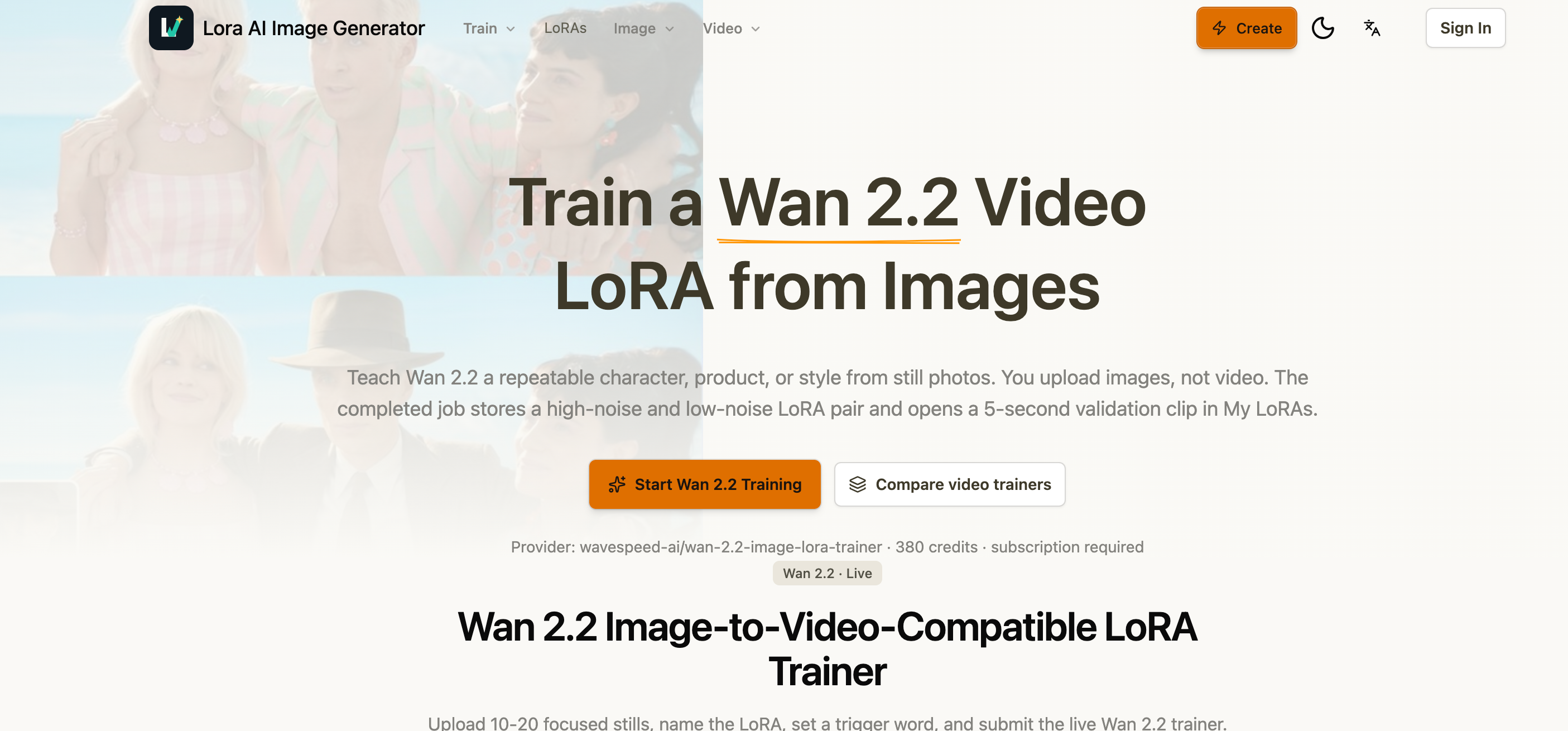
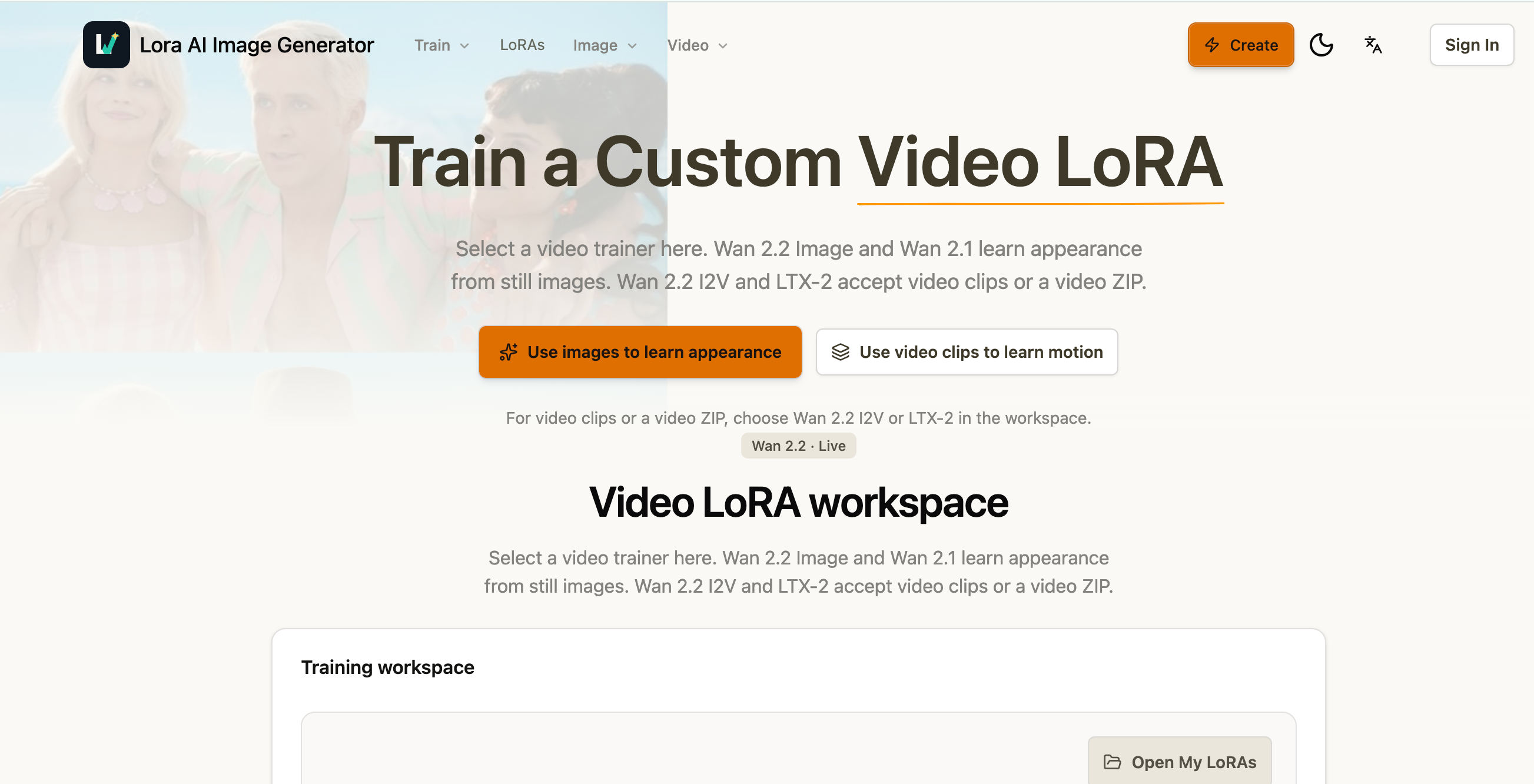
LoRAAI Pro's video LoRA training workspace separates these inputs. Its Wan 2.2 image-based route accepts 10-20 focused still images and is intended for learning appearance. Its Wan 2.2 I2V training route accepts video clips and recommends 5-10 focused examples for motion or effects. For a recurring mascot, the initial objective might be retaining a recognizable silhouette. For a product animation, it might be repeating a specific turn or reveal. These are different training briefs, even when the final deliverable is a short video.
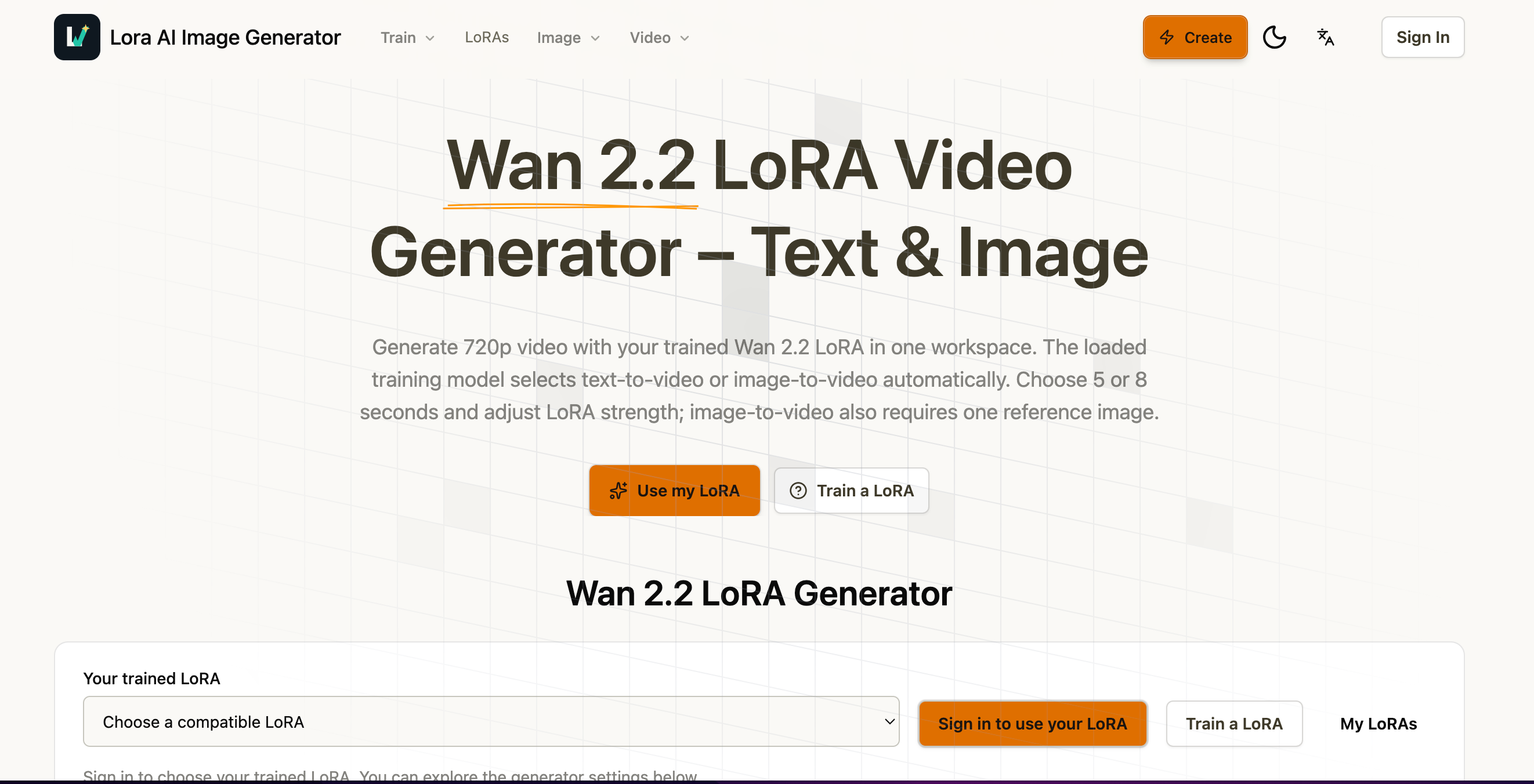
The distinction continues after training. In the platform's Wan 2.2 video generator, the image-trained route feeds text-to-video, while the clip-trained I2V route feeds image-to-video and requires a reference image. Completed models can be opened from My LoRAs. The workspace loads the associated high-noise and low-noise weight files together and selects the compatible generation mode. Sharing a model-family name does not make every adapter interchangeable.
A six-clip check before wider reuse
The proposed check turns a broad goal such as "consistent video" into three specific test conditions. A creator defines a familiar composition, a changed camera view and a different scene, while keeping the intended subject or action clearly specified. For each condition, the creator generates one baseline clip with LoRA strength at zero and one with the trained adapter at a chosen nonzero strength.
Within each pair, the base model, prompt, duration, resolution and any reference image should remain the same. Automatic prompt enhancement should be disabled for the comparison. If seed control is available, the seed should also match; otherwise, randomness remains an uncontrolled factor and unclear results need additional trials. The six clips are an initial screening exercise, not a statistical benchmark or a demonstrated success rate.
Reviewers then inspect the beginning, middle and end of each clip and watch the full sequence. Appearance review checks facial features, silhouette, clothing and product details. Motion review checks whether the requested action is recognizable and continuous. A third check records flicker, sudden shape changes and unwanted background changes. Keeping these observations separate helps reveal a model that preserves a recognizable subject but struggles with movement, or learns an effect while weakening subject detail.
Training decisions also need an output budget. As listed on November 16, 2026, the Wan 2.2 generator charges 20 credits for a five-second clip. Six such clips therefore require 120 generation credits, separate from training. Creators can track total project credits divided by the number of clips that meet their stated acceptance criteria. This is a planning calculation; it does not assume every generation is usable or promise that training will reduce costs.
From a trained adapter to the next video
LoRAAI Pro also provides a general LoRA AI Video Generator with text-to-video, image-to-video and video-to-video modes. A creator exploring a one-off concept can begin with the appropriate generation mode; a recurring visual or movement can justify a dedicated training workflow. Custom adapters still require a compatible model and mode, and LoRA support should not be assumed for every option in the general generator.
The workflow is intended to help creators build a reusable production record: the dataset, training model, prompt, generation settings and retained clips. That record gives the next project a documented starting point and makes shortcomings visible before a larger batch is commissioned. Current trainer requirements, account access and credit costs are displayed on the relevant product pages.
About LoRAAI Pro
LoRAAI Pro is an online platform for custom LoRA training and AI image and video generation. Its workflows support creators exploring repeatable characters, visual styles, products and motion, with model-specific training inputs and generation paths.
Source :LoRAAI Pro
This article was originally published by IssueWire. Read the original article here.
More News



YOUR NEWS, OUR NETWORK.
Do you have Great News you want to tell the world?
Be it updates about your business or your community, you can make sure that it’s heard by submitting your story to our network reaching hundreds of news sites across 6 verticals.